Thursday, June 8, 2017

L'Ombre chinoise

#57 L'Ombre chinoise (The Shadow Puppet) by Simenon

Simenon's Maigret is another detective that I like. The Maigret novels have a sense of atmosphere--lots of times they feature fog, rain, or other inclement weather. I think it would be fun sometime to find some of the places that are repeatedly mentioned as part of Maigret's haunts--the Boulevard Richard-Lenoir and the Quai des Orfevres. L'Ombre chinoise was published in 1957.

At 10 o'clock at night Maigret is summoned to 61 Place des Vosges which consists of a square of apartment buildings overlooking a central courtyard. There are two boutiques and a laboratory. M. Couchet, owner of the laboratories, is found shot in his office and a large sum of money has been stolen from the office safe.

Suspicion falls on:

  • M. Couchet's son Roger who is a penniless, ne'er-do-well, and ether user. Roger frequently asked his father for money. 
  • M. Couchet's first wife Mme Martin: Mme Martin has remarried and she and M. Martin live in an apartment at 61 Place des Vosges. Mme Martin spends much of her time watching people from behind their living room curtain; this is where the book's title comes from. Maigret first notices her shadow behind the curtain.
  • Nine: M. Couchet's latest mistress. Nine is a good-hearted dancer at the Moulin Bleu.
  • Mme Couchet: M. Couchet's second wife. She is from a wealthier background that he was. 
Valuable information is obtained from the resident busybody Mathilde who spends much of her time spying on people in the hallways. I consider Mathilde a second "ombre chinoise" or shadow puppet. 


Friday, June 2, 2017

The Colour of Milk

#56: The Colour of Milk by Nell Leyshon

"this is my book and i am writing it by my own hand. in this year of lord eighteen hundred and thirty one i am reached the age of fifteen" and so begins Mary's account of the events of 1831.

Mary is one of four daughters (Violet, Beatrice, and Hope) who work hard on their family's farm in England. Violet is beginning to discover her sexuality, Beatrice has a love of Scripture despite not being able to read, and Hope is short-tempered. Mary speaks her mind...a bit too much for her own good. She often suffers abuse at the hands of her father.

On Easter Sunday, the girls sneak out of the house to watch the sunrise. Supposedly, if they make a wish at this time, it will come true. Mary wishes her life would change.

Shortly thereafter, Mary is sent to work at the vicarage as a housemaid and caretaker for the vicar's wife. Though nearby, the vicarage is a world away from her family's farm and life as Mary knows it. Living at the vicarage may not have been the change Mary wished for.

The Colour of Milk is a quick read and is divided into five parts: spring, summer, autumn, winter, and spring.  I was reminded of Marie-Claire Blais' Une saison dans la vie d'Emmanuel (A Season in the Life of Emmanuel). Une Saison tells the story of a French-Canadian family at the turn of the 20th century. The story is told from Emmanuel's perspective (he is the sixteenth child). Une Saison is part of the anti-terroir literature in Quebec--a number of Emmanuel's sibling leave the family farm for the city and Mary's work at the vicarage and exposure to books also distances her from an agricultural life.


Saturday, May 27, 2017

More Miss Marple

May has become Miss Marple Month. Books 54 and 55 were also Miss Marple mysteries.

#54, the Murder at the Vicarage, is Miss Marple's first case. In this novel readers are introduced to Miss Marple, the village of Saint Mary Mead, and some recurring characters such as Doctor Haydock, Miss Marple's nephew Raymond West, and Chief Constable Melchett. Over time, Agatha Christie's portrayal of Miss Marple changed. She is always an octogenarian old pussy, but in The Murder at the Vicarage, Miss Marple is portrayed as an old cat--a gossip who thinks the worst of people, and isn't particularly well-liked. In later novels, Miss Marple is not catty, and although she knows a great deal about the goings-on in the village of Saint Mary Mead, she is well-liked and respected.

One evening, Colonel Protheroe, the town Magistrate, is found stabbed in the vicar's study.  Miss Marple says she can think of at least seven people who could have killed Colonel Protheroe. First, local artist Lawrence Redding claims to have murdered him. Lawrence was having an affair with Mrs. Protheroe. Then Mrs. Protheroe confesses to the murder in order to exonerate Lawrence. Suspicion also falls on the vicar, who was overheard to have wished Colonel Protheroe dead. One of Miss Marple's hunches was correct.


#55 What Mrs. McGillicuddy Saw: The week before Christmas Mrs. McGillicuddy has gone to London to complete her holiday shopping. On the 4:50 to Paddington (4:50 to Paddington is an alternate title) Mrs. McGillicuddy wakes from a nap and as the train slows down, she glimpses a man strangling a woman on another train. She duly reports what she saw to a conductor, who is skeptical. She then tells her friend Miss Marple what she saw and Miss Marple shares the story with the police. The police find nothing.

Miss Marple believes her friend and so she takes matters into her own hands. She hires Lucy Eyelesbarrow, an Oxford-educated upstairs-downstairs maid and domestic wonder to look for the body. By looking at railway maps and riding the 4:50 from Paddington herself, Miss Marple determines the most likely place for the body to have been dumped. Lucy secures a position in the Crackenthorpe household and begins her search for a body. The original body as well as two more turn up before Miss Marple is able to solve the case.


Thursday, May 18, 2017

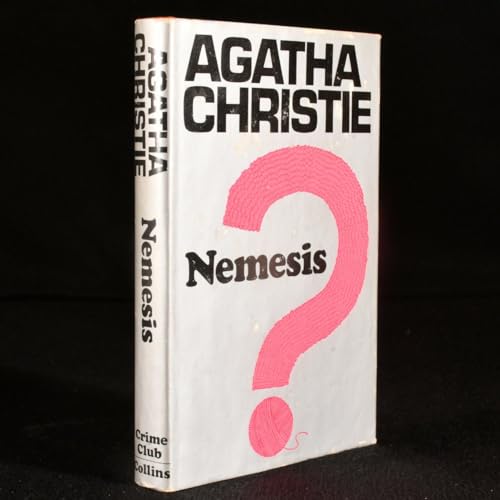
#53 Nemesis

Nemesis is another Miss Marple mystery. Miss Marple receives a letter from Mr. Rafiel's solicitors following his death. Mr. Rafiel was a wealth financier who helped Miss Marple solve the murders in A Caribbean Mystery. The solicitors explain that Mr. Rafiel has asked Miss Marple to act as Nemesis and to seek justice on his behalf. Should she succeed, she will receive 20,000 pounds. Miss Marple accepts the challenge and the wheels are set in motion. First, she is instructed to go on a Home and Garden Tour (all expenses paid by Mr. Rafiel). On the tour, various people who were acquaintances of Mr. Rafiel seek her out and divulge information. Miss Marple has to figure our what crime she is supposed to be avenging and who she can and cannot trust.

Of course Miss Marple succeeds and is awarded her 20,000 pounds.


Apparently, I have three copies of this novel: the above hardback, a paperback, and the third copy is part of a collection of 5 Miss Marple mysteries.

Friday, May 12, 2017

Remembered Death and A Caribbean Mystery

Books 51 and 52 are both by Agatha Christie and since I finished one yesterday and the other today, I decided to do one post.

Remembered Death/Sparkling Cyanide:

At Rosemary Barton's birthday, her guests saw her drink champagne and then collapse. The verdict was suicide, she has been depressed following a bout of the flu. Six months later, her husband George received an anonymous letter that said his wife had been murdered. Questions were asked and the invitees began to remember things. But someone remembered one thing too many and the murderer struck again.


  • George Barton: Rosemary's devoted husband
  • Iris: Rosemary's younger sister. Penniless while Rosemary was alive, she inherited Rosemary's fortune.
  • Stephen Farraday: a rising member of Parliament. He had an affair with Rosemary. Public knowledge of the affair would be disastrous for his career.
  • Lady Alexandra Farraday: Stephen's wife. She may or may not have been aware of his affair with Rosemary.
  • Anthony Browne: A shifty American who deals in armaments. He also had an affair with Rosemary.
  • Ruth Lessing: George Barton's secretary. She loves her boss and without Rosemary in the picture, she could make a fine wife for him.
  • Lucilla Drake: a distant relative of Rosemary and Iris. She looked after the girls following their parents' deaths. Believes everything her son, Victor says. 
  • Victor Drake: a good-for-nothing scoundrel who frequently wires his mother for money.


A Caribbean Mystery:

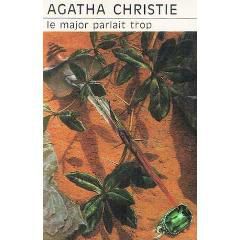
Miss Marple is enjoying a holiday in the Caribbean courtesy of her nephew and his wife. While, there, Miss Marple listens to Major Palgrave's endless stories about his travels and former exploits. Major Palgrave claims to know of a  murderer, and what's more, he has a photograph of this person (the photograph was given to him by a friend). That night Major Palgrave dies. At first, his death is attributed to high blood pressure and too much alcohol. But Miss Marple has her doubts and further investigations prove that he was murdered. Several people had heard Major Palgrave tell this story about a murderer, and no one is safe until the murderer is caught.

I don't like the cover of my English version, but I do like the cover my French version (The Major Talked Too Much).

Sunday, May 7, 2017

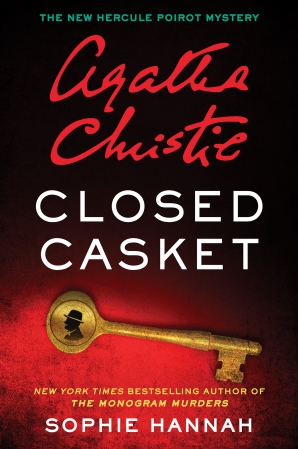
Book 50: Closed Casket

Closed Casket : The New Hercule Poirot Mystery by Sophie Hannah

As I've mentioned before, Agatha Christie is my favorite author and Poirot is my favorite detective of hers. I was hesitant to read Hannah's newest Poirot adventure and was convinced I wouldn't like it. I did enjoy the story (I read the entire thing in one day), but not as a Hercule mystery. While there were elements common to Christie's novels, I felt they were underdeveloped and/or completely random.

Lady Athelinda Playford is a famous novelist of the Shrimp Seddon mysteries for children. (This was reminiscent of Ariadne Oliver). Lady Playford invites Inspector Edward Catchpool of Scotland Yard and Hercule Poirot to stay at her country estate, Lillieoak, County Cork Ireland. Prior to their arrival, Lady Playford meets with Micheal Gathercole, her solicitor, and asks him to rewrite her will. Lady Playford's new will leaves everything to her secretary, Mr. Joseph Scotcher who is terminally ill with Bright's disease. Left out of her will are her two children, Viscount Harry and his wife Viscountess Dorothy, and her daughter Claudia and her fiancee Dr. Randall Kimpton.

Lady Playford announces her revised will during dinner. As expected, the information isn't received well. Her children are shocked, as is Joseph Scotcher. That night someone is murdered. The incompetent Irish Inspector begrudgingly agrees to let Poirot and Catchpool assist with the investigation. Poirot uses his little grey cells, takes a trip to England to gather information, and finally gathers everyone together to unmask the murderer.

One of the things I love about Poirot is his sense of self-importance and his lack of modesty. In Closed Casket, I found Poirot rather subdued. I honestly think Poirot could have been replaced with a differently named private investigator and the story would have been fine.


Wednesday, May 3, 2017

A Paris Apartment

Book 49: A Paris Apartment by Michelle Gable

April Vogt, a Continental Furniture Specialist at Sothebys, is sent to Paris to inventory the contents of a Parisian apartment that has been sealed for 70 years, since 1939.

The apartment once belonged to Marthe de Florian, a demimondaine of the Belle Epoque. Marthe's treasures are numerous, but the most shocking of all is a previously unknown portrait by the artist Boldini. April also discovers Marthe's journals which provide provenance for the items in the apartment, but also help her discover who Marthe was. Or who she appeared to be.

Marthe's journals help April discover things about herself. April has left a cheating husband in New York , (whether temporarily or permanently she has yet to decide), a family crisis that has been brewing for decades, and her less-than satisfying career in New York. As her personal life reaches a tipping point, April is tempted by wine, pastries, and the handsome solicitor who works on behalf of Marthe's heir.

Will the auction give Marthe the glory she so desperately sought and allow April to find her happy ending?

I found both Marthe's and April's stories compelling. April uses the journals as a way to escape her present-day problems and the two narratives are interspersed.


This novel is based on true events. See here for a look at Marthe de Florian's apartment:

http://shareably.net/art-found-in-paris-apartment-that-
was-vacant-since-1939/

Marthe's portrait by Giovanni Boldini