Monday, April 1, 2019

Hidden Gardens of Paris

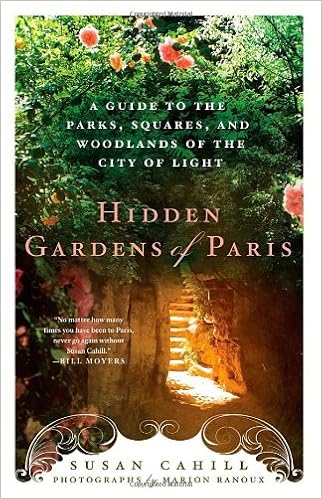
Hidden Gardens of Paris: A Guide to the Parks, Squares, and Woodlands of the City of Light by Susan Cahill and photographs by Marion Ranoux

As spring arrives I'm in the mood to garden. Hidden Gardens of Paris was a good springtime read. I enjoyed reading about favorite green spaces in Paris and discovering new ones to add to my travel itinerary for the future.

Walking is a way to speak the language of a city "Only by using one's leg power to see one arrondissement after another can you get inside that language. moving on foot from central or western Paris into the northeast enables the physical and emotional reverberations of 'psychogeography,' the sense of 'the sudden change of ambiance in a street within the space of a few meters, the evident division of the city into zones of distinct psychic atmosphere.' As you walk, it becomes obvious, the City of Light speaks many languages" (185).


There is no better city to stroll through than Paris. My favorite green spaces include: the Tuilleries, the Jardin de Luxembourg, le Parc des Buttes Chaumont, and cemeteries large and small. My very favorite green space in all of France is an hour away from Paris: Monet's gardens at Giverny. 

Saturday, March 30, 2019

March Roundup

I have been reading throughout the month but have obviously not been writing about what I've read. So here's a roundup all in one post.

140) One by One: A Memoir of Love and Loss in the Shadows of Opioid America by Nicholas Bush


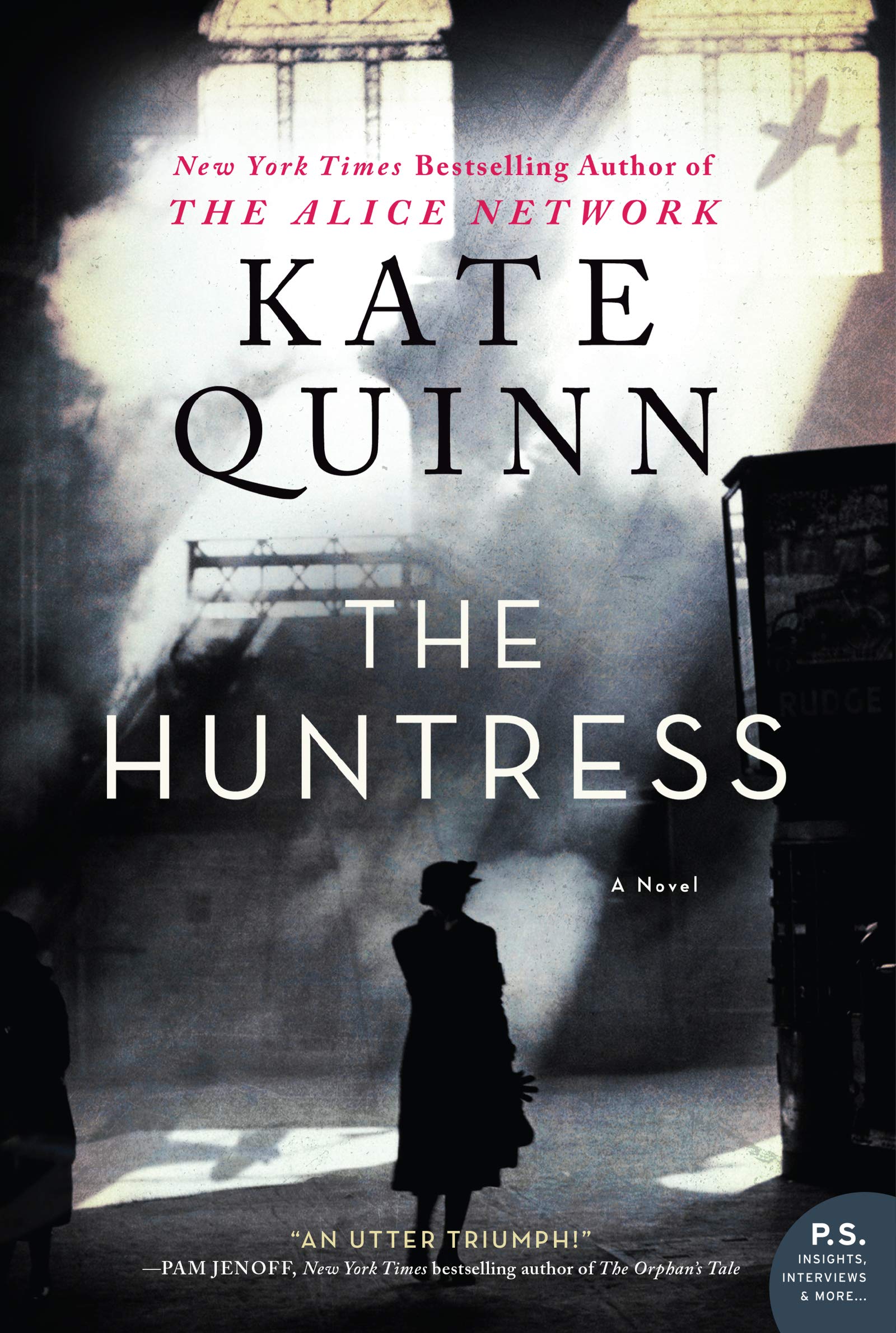
141) The Huntress by Kate Quinn. At 531 pages this was a long read, but I read it in a day and a half. Kate Quinn wrote The Alice Network and the character Eve Gardiner makes a brief appearance in The Huntress. Quinn was inspired by lakes, water, and the water nymphs that inhabit them in writing the story of The Huntress. The Huntress takes readers from the shores of Selkie Lake in post-World War II Boston, to the icy edge of Russia and the shores of Lake Baikal, to Lake Rusalka in Poland, and the spa town of Altaussee in Germany during and after the War. As far as spirits, the Rusalka and her German counterpart the Lorelei in turn hunt and are hunted, haunt and are haunted by each other. Nina Markova grew up on the edge of Soviet Russia and became a pilot. Swept up in the war she joins the infamous Night Witches. Behind enemy lines crosses paths with a Nazi Murderess known as die Jagerin (The Huntress). British War Correspondent Ian Graham has witnessed the horrors of war as a journalist. When the war ends, he abandons journalism and becomes a Nazi hunter with the help of his Jewish-American partner Tony. Their primary target is The Huntress and they must rely on Nina's help to find her, the only one escape the Huntress' clutches alive. On the other side of the ocean,  17 year-old Jordan McBride dreams of becoming a photographer. Jordan's quiet life is thrown for a loop when her widowed father decides to marry a German widow. Her investigations into her stepmother's past threaten everything.


142) A Bite-Sized History of France: Gastronomic Tales of Revolution, War, and Enlightenment by Stephane Henaut and Jeni Mitchell. 
The authors trace the history of France and her iconic food and beverages in appetizing vignettes. But underneath this bite-sized history is a more serious study of France's foodways and the power therein.  "By examining 'foodways'--the political, economic, and social practices related to food in a particular region or era--we can learn much about who hold the most power in a society, what sorts of values they prioritize, and how they sustain their elevated position. We can also learn about the most deprived communities, the constrains and limitation they in simply trying to feed themselves and survive, and what this indicates about the broader society in which they live" (283). 


143) The Good, the Bad, and the Furry: Life with the World's Most Melancholy Cat by Tom Cox 

Tom's daily life managing or being managed by his cats Janet, The Bear, Shipley, Ralph, and Roscoe.
 I enjoyed this psychoanalysis of cats that he has encountered on his travels or just walking down the street. Although I don't psychoanalyze the cats I see outside, I love to pet them. Before adopting a cat together Tom and his girlfriend Gemma imagined what their new cat would be like, created a whole personality for their future cat and selected a name. My husband and I did this before adopting our cats. Like Tom and Gemma's new kitten, our cat did not quite live up to our imagined version. 
In the chapter entitled "Keeping our Cats out of the Bedroom: Instructions for Housesitters" Tom refers to his cats as follows: the old intellectual black one, the middle-aged mouthy black one, the narcisssitic tabby one  (who really likes to meow his name and the word "HELLO" at 3 a.m.), and the small black and white one who looks like a living cartoon". Tom accurately captures how much of our daily lives cats take up. 


Thursday, February 28, 2019


Résistance : A Woman’s Journal of Struggle and Defiance in Occupied France by Agnès Humbert, translated by Barbara Mellor

“On 13 April [1941] my diary ends”. Thrust into life in the Prison du Cherche-Midi, Agnès imagines her death “Here lies Agnès Humbert, died 15 April 1941.” In 1945, months after shedding her identity as a political prisoner and becoming a Nazi Hunter in Germany, Agnès’ war ends.

In 1940 as the Nazi’s tightened their grip around Paris and the rest of France, a group of colleagues at the Musée de l’Homme in Paris decided to form a network that would become a key member of the Resistance. Among them was respected art historian Agnès Humbert. The group published and disseminated a newsletter called “Résistance” which no doubt gave its name to the movement. In 1941 prominent members of the group were arrested, imprisoned, and later tried and executed or deported to German labor camps.

Agnès’ diary is unique among resistance narratives. Her journal was first published in 1946, soon after the end of the war. Part of the diary was written as events unfolded (the first nine months or so of her account), but large parts of it were written after the war’s end from memory. Julien Blanc explains that Résistance features two types of writing—spontaneous diary entries and considered recollections from memory. Unifying these types of writing is Agnes’ vivid, passionate tone.


Sunday, February 24, 2019

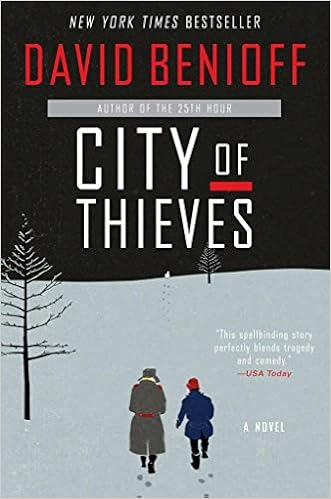
City of Thieves by David Benioff

Often I can tell within a page or two if I'm going to enjoy a book, and I enjoyed City of Thieves from the first paragraph.

During the siege of Leningrad, Lev Beniov is imprisoned for stealing. His cellmate is a charming Red Army deserter named Kolya. Instead of being executed, the two are given a chance to gain their freedom--if they can fulfill an impossible task. A Colonel in the upper echelon's of the Soviet Army asks them to bring back a dozen eggs for his daughter's wedding which will be held in four days' time.  Lev and Kolya set out to find the impossible in a lawless and deprived Russia.

And for fans of a different series, David Benioff is a co-creator of Game of Thrones television series.


Sunday, February 17, 2019

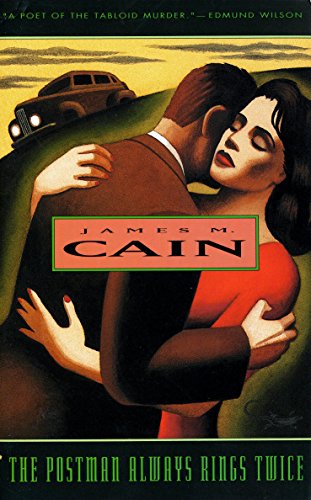
The Postman Always Rings Twice

The Postman Always Rings Twice by James M. Cain

The Postman Always Rings Twice is a crime noir novel published in 1934 and banned for violence and eroticism. Frank, a young tramp becomes taken with his employer's wife Cora. Cora, for her part is sullen and beautiful with a disappointing husband. Frank and Cora decide there is only one solution to their problems, but their solution only creates more problems.

I enjoyed the story, but I didn't care for the language or Cain's style of writing. With its focus on staging a crime, the theatrical, and artistic side of murder, I was reminded of Emile Zola's Therese Raquin and La Bete Humaine.


Saturday, February 16, 2019

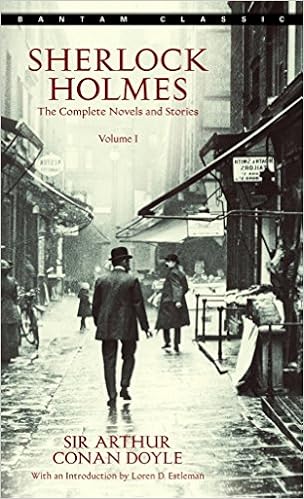
Sherlock Holmes

Books 136, 337, and 138:

Sherlock Holmes The Complete Novels and Stories Volume 1

  • A Study in Scarlet
  • The Sign of Four
  • Adventures of Sherlock Holmes
  • Memoirs of Sherlock Holmes
  • The Return of Sherlock Holmes


Monday, January 28, 2019

Goodbye, Paris

Goodbye, Paris by Anstey Harris

"Paris is, as my late father used to say, where I left it. The city doesn't know that anything has changed. In the same way it always has, this city accepts me just the way I am. In return, I love it back. "

Grace Atherton once dreamed of being a concert cellist. She had the talent and the drive, but after quitting music college twenty years ago, she hasn't played the cello since. Grace's present life revolves around her music shop where she makes and restores violins and cellos. The other constant in her life his her (married) partner David. The rhythm of Grace's life stops following an incident in Paris. With the help of her shop assistant Nadia and a delightful customer Mr. Williams, Grace is finally able to play the cello again and compose a new musical score for her life.