Tuesday, June 18, 2019

A Year in Provence

After years of visiting Provence as tourists, Englishman Peter Mayle, his wife Jennie, and their two dogs took the plunge and purchased a house in the Lubéron valley in Provence. The mas, or farmhouse, was located on the country road that runs between the medieval villages of Ménerbes and Bonnieux. The farmhouse was two hundred years old and made of local stone. A Year in Provence is a witty, insightful, and delightful record of the Mayle's first year as French residents. Each chapter is devoted to a month and readers are taken through a year divided up by weather, crops, the vendage, markets, boules, and feast days. Life in Provence as a rhythm all its own. The terroir and weather (especially the formidable mistral) are standout characters on par with the disappearing construction crew and colorful neighbors.
I loved the description of the cornucopia of goods found at one of the local markets. "We set off for the main square, running the gauntlet between groups of sallow gypsy girls in tight, shiny black skirts selling lemons and long plaits of garlic, hissing at one another in competition. The stalls were crammed haphazardly along the street--silver jewelry next to flat wedges of salt cod, wooden barrels of gleaming olives, hand-woven baskets, cinnamon and saffron and vanilla, cloudy bunches of gypsophila, a cardboard box full of mongrel puppies, lurid Johnny Hallyday T-shirts, salmon-pink corsets and brassieres of heroic proportions, rough country bread and dark terrines" (May page 92). Every French village has a market; some of the larger ones are truly remarkable for the range of produce and miscellany one can find.
Mayle's book makes one appreciate the land, food, climate, and people on a local level. One evening, their neighbor Faustin brought them a large bunch of fresh asparagus which they cooked and ate with "bread that had been baked that afternoon in the old boulangerie at Lumières. We drank the light red wine from the vineyards in the valley. We supported local industry with every mouthful" (May page 86). One can almost taste and smell the local delicacies. 

For further reading I recommend Mayle's Toujours Provence, a continuation of his life in Provence and his novel Hotel Pastis. There is also Alphonse Daudet's Lettres de mon moulin which is a collection of short stories and provencal lore written in the 19th century. 


Tuesday, June 11, 2019

The Sapphire Widow

The Sapphire Widow by Dinah Jeffries

1935 Ceylon. Louisa Reeve is the daughter of a sapphire trader and her husband Elliot works in the gem trade as well. The couple have been happily married for years despite struggling with miscarriages and a stillbirth. Louisa and Elliot cope in their own ways, Louisa by keeping busy with various projects and Elliot by thrill-seeking. Elliot is increasingly absent from home, spending time at a cinnamon plantation he has invested in.
The night of their anniversary party, Elliot is absent and the police arrive to say he died in a car accident. Wrought with grief, Louisa delves into Elliot's affairs and discovers a pile of debts, investments that never were, and a death that may not have been accidental. Most crushing is that Elliot had a mistress and a child. As she comes to terms with her late-husband's past, Louisa finds herself drawn to the owner of the cinnamon plantation, a man with a colorful past and a link to her future.


Sunday, June 2, 2019

Howard's End is on the Landing

Howard's End is on the Landing by Susan Hill

Author Susan Hill is searching for a book in her house and the book turns up not where she thought it would be, but nestled in among other books some place else. Hill's book is an inventory of her bookshelves and other book storage areas in her house. Hill reflects on favorite books, well-travelled books, and "Never got around to it, Don't like the look of it, Couldn't get beyond page Ten, and Other poor excuses". As Hill inventories her collection, she reflects on the books and authors that have shaped a lifetime of reading.

I finished this book in early May and never got around to blogging about it, until now. I received a notice that it is due at the library. About the time I read Howard's End is on the Landing, I rearranged my office and took a brief inventory of my own shelves. I have my favorites that have been in my collection for years and probably will always be there: my Agatha Christies, Calvin and Hobbes, and a few others. Then there are the shelves of French literature. My French literature collection is not what it was in Grad School; I have culled it since I am not teaching and my interests have changed. It is hard for me to part with my French novels because I did enjoy reading them and they were purchased during an important time in my life. On several other shelves are my travel, history, and coffee table books. The rest of my books are mysteries and general fiction.

Like Susan Hill, I could probably read books from my shelves for a year and never need to visit the library.


Tuesday, May 28, 2019

Book Towns

Book Towns: Forty-Five Paradises of the Printed Word by Alex Johnson

Book towns can be of any size and anywhere in the world, but Alex Johnson says that many book towns are located in smaller towns and villages because rent is cheaper for proprietors. Book towns were begun with the goal of encouraging sustainable tourism and regenerating communities faced with economic collapse. A book town has several book shops and other businesses dedicated to books and the printed word. In a dedicated book town, book shops are concentrated in a small area. The movement was started by Richard Booth in Hay-on-Wye in Wales in the 1960s and spread from there (7). All of these book towns operate independently, but many are part of the International Organization of Book Towns. The IOBT seeks to raise interest in the ethos of book towns and holds a biennial festival in one of the towns.
I love to go to book stores and a book town would be even better. Below are the towns that most appealed to me and, no surprise, many are in France.


  1. Bécherel, France: France's first book town in 1989 when the Fete du livre was hosted there. There are now seven other French towns that with Bécherel make up the Federation des Villes, Cites, et Villages du Livre en France. 
  2. Clunes, Australia; annual festival drawing crowds of 18,000+, there are 7 bookshops scattered about the city and there is a travelling children's bookshop.
  3. Cuisery, France. Jean Perdu, the protagonist of Nina George's The Little Paris Bookshop, mentions that the whole village of Cuisery is crazy about books. The town now has 15 booksellers and businesses related to books. The first Sunday of every month is a book market. 
  4. Fontenoy-La-Joute, France. There is a signpost in the village center pointing visitors to other book towns around the world and imaginary locations.
  5. La Charite-Sur-Loire, France. Every May the town hosts the Festival du Mot: a celebration of words in theater, dance, music, visual arts, and books. 
  6. Langenberg and Katlenburg, Germany. Pastor Martin Weskott of the Johannes-Kirchengemeinde in Katlenburg has been rescuing and selling books printed in East Germany since the fall of the Berlin Wall. 
  7. Montmorillon, France: La Cite de l'ecrit et metiers du livres. De la Trappe aux livres has a good number of bookcases, board games, and 100 types of beer. 
  8. Montolieu, France
  9. Obidos, Portugal. Instead of opening dedicated bookstores, proprietors in Obidos simply add books to the goods they sell: cookbooks compete for shelf space in the grocery store, art galleries sell art books, and museums sell history books. 
  10. St.-Pierre-de-Clages, France 
Never fear, if you pick up too many books while travelling, there is always the option of shipping them home via the post office. Although, I was able to pack 28 books in my suitcases coming home from France and the cases were still not overweight. Some of my most treasured books have been collected while travelling. I enjoy looking for Agatha Christie books in France. I am loathe to part with any book, but books I purchase while travelling are kept forever. 


Thursday, May 23, 2019

Midnight in Siberia

Midnight in Siberia by David Greene, host of NPR's Morning Edition

David Greene and his wife Rose spent three years living in Moscow beginning in 2009 when David was named Moscow Bureau Chief for NPR. He returned in 2011 and 2013 for journeys on the Trans-Siberian Railroad; Midnight in Siberia is the account of his 2013 journey.

David's journey on the Trans-Siberian Railroad is far from the plush-filled cabins of the Orient Express. David and his colleague Sergei travel in third-class, quadruple-bunked cabins, eat instant noodles more often than not, and make frequent stop-overs in towns scattered across the snowy landscape. The 6,000 mile journey takes David from Yaroslavl in the West to Vladivostok in the East. There is a map that shows which towns David visited on his journey, but the chapter titles are the names of people he met in each town.
The Trans-Siberian Railroad is Russia's spine, "a thin line of constancy that holds this unwieldy country together. it's more than just a map that underscores this. The railroad connects families, bringing distant relatives together more affordably than air travel. And it connects different chapters in this country's journey" (author's note). As David travels across Russia, he attempts to make sense of this vast, seemingly disparate country through the stories and personal accounts of everyday Russians. He also discusses Soviet and Post-Soviet Russia, and how Vladimir Putin's government has shaped relations between the United States and Russia, and local reactions to Putin's government versus Soviet socialism.
"Russian scholars and writers have long spoken of their country's confounding nature, how it takes wild turn and goes through periods of upheaval but always seems to return to a cruel, dysfunctional resting place" (9). In the novel Dead Souls, Gogol compares Russia to an out-of-control troika (a traditional Russian sled pulled by three horses) and asks, "Russia where are you flying?...Answer me...there is no answer" (9). In 2013, Russia was careening down a similar path. David saw a thin line of constancy, the Trans-Siberian Railroad, connecting Russian cities and steppes, problems and potential, its past and its future. But, an undercurrent of uneasy frustration was expressed by millions of people in a nation stretching from Europe to Pyongyang and Alaska, these millions of people are unable to answer two basic questions: where is your country going? and what do you want for it's future? (12).

I enjoyed riding along with David and "meeting" Russian's from across the country.

The map; the darker railroad tracks mark David's path; the lighter railroad tracks are main parts of the TSR that David did not travel on.

Interview with David on ThisIsAmericaTV


Tuesday, May 21, 2019

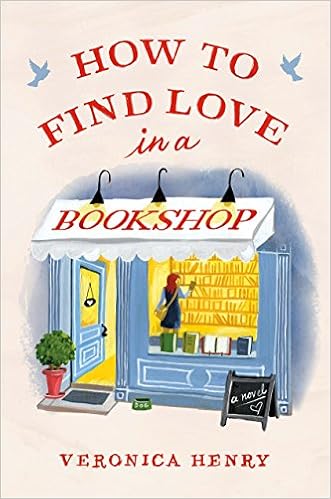
How to Find Love in a Bookshop

155. How to Find Love in a Bookshop by Veronica Henry

Years ago, Julius Nightingale moved to a small town and opened a bookshop. Nightingale Books became a fixture in the community and although beloved, was showing signs of age. Following her father's death, Emilia takes over as manager of Nightingale Books, but mounting debts make selling an increasingly enticing option. Her devoted staff and customers help Emilia refurbish the bookshop and continue her father's legacy. Love is indeed found among the stacks of books at Nightingale Books. Emilia finds love; a father discovers a love of reading with his son and rekindles a relationship with his ex-wife; Thomasina, the shy home-economics teacher falls for the cheese-monger, and more.

A pleasing read about the love of books, the people who love books, and the magic of a bookshop.


The Glow of Death

153. The Glow of Death: A Josie Prescott Antique Mystery

I finished this on May 4th, but have been remiss in my blogging, so stay tuned.

Josie is asked to appraise a Tiffany lamp. She meets with the woman selling the lamp and conducts her appraisal. The lamp is indeed a genuine Tiffany lamp. Several days later, the owner of the lamp is found dead...but the dead woman and the woman who contacted Josie about appraising her lamp are two different people.