Thursday, May 23, 2019

Midnight in Siberia

Midnight in Siberia by David Greene, host of NPR's Morning Edition

David Greene and his wife Rose spent three years living in Moscow beginning in 2009 when David was named Moscow Bureau Chief for NPR. He returned in 2011 and 2013 for journeys on the Trans-Siberian Railroad; Midnight in Siberia is the account of his 2013 journey.

David's journey on the Trans-Siberian Railroad is far from the plush-filled cabins of the Orient Express. David and his colleague Sergei travel in third-class, quadruple-bunked cabins, eat instant noodles more often than not, and make frequent stop-overs in towns scattered across the snowy landscape. The 6,000 mile journey takes David from Yaroslavl in the West to Vladivostok in the East. There is a map that shows which towns David visited on his journey, but the chapter titles are the names of people he met in each town.
The Trans-Siberian Railroad is Russia's spine, "a thin line of constancy that holds this unwieldy country together. it's more than just a map that underscores this. The railroad connects families, bringing distant relatives together more affordably than air travel. And it connects different chapters in this country's journey" (author's note). As David travels across Russia, he attempts to make sense of this vast, seemingly disparate country through the stories and personal accounts of everyday Russians. He also discusses Soviet and Post-Soviet Russia, and how Vladimir Putin's government has shaped relations between the United States and Russia, and local reactions to Putin's government versus Soviet socialism.
"Russian scholars and writers have long spoken of their country's confounding nature, how it takes wild turn and goes through periods of upheaval but always seems to return to a cruel, dysfunctional resting place" (9). In the novel Dead Souls, Gogol compares Russia to an out-of-control troika (a traditional Russian sled pulled by three horses) and asks, "Russia where are you flying?...Answer me...there is no answer" (9). In 2013, Russia was careening down a similar path. David saw a thin line of constancy, the Trans-Siberian Railroad, connecting Russian cities and steppes, problems and potential, its past and its future. But, an undercurrent of uneasy frustration was expressed by millions of people in a nation stretching from Europe to Pyongyang and Alaska, these millions of people are unable to answer two basic questions: where is your country going? and what do you want for it's future? (12).

I enjoyed riding along with David and "meeting" Russian's from across the country.

The map; the darker railroad tracks mark David's path; the lighter railroad tracks are main parts of the TSR that David did not travel on.

Interview with David on ThisIsAmericaTV


Tuesday, May 21, 2019

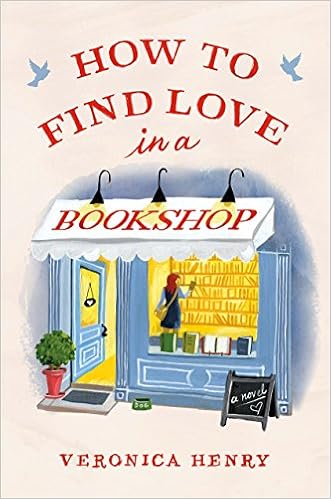
How to Find Love in a Bookshop

155. How to Find Love in a Bookshop by Veronica Henry

Years ago, Julius Nightingale moved to a small town and opened a bookshop. Nightingale Books became a fixture in the community and although beloved, was showing signs of age. Following her father's death, Emilia takes over as manager of Nightingale Books, but mounting debts make selling an increasingly enticing option. Her devoted staff and customers help Emilia refurbish the bookshop and continue her father's legacy. Love is indeed found among the stacks of books at Nightingale Books. Emilia finds love; a father discovers a love of reading with his son and rekindles a relationship with his ex-wife; Thomasina, the shy home-economics teacher falls for the cheese-monger, and more.

A pleasing read about the love of books, the people who love books, and the magic of a bookshop.


The Glow of Death

153. The Glow of Death: A Josie Prescott Antique Mystery

I finished this on May 4th, but have been remiss in my blogging, so stay tuned.

Josie is asked to appraise a Tiffany lamp. She meets with the woman selling the lamp and conducts her appraisal. The lamp is indeed a genuine Tiffany lamp. Several days later, the owner of the lamp is found dead...but the dead woman and the woman who contacted Josie about appraising her lamp are two different people.

Tuesday, April 30, 2019

April List

The list of books I read in April. My new total is 152 books; hopefully I can break 200 by the end of the year.


  1. An Elderly Lady is Up to No Good by Helene Tursten
  2. The Colour of Murder by Julian Symons
  3. Deadly Threads: A Josie Prescott Antiques Mystery by Jane K. Cleland
  4. Dolled Up for Murder by Jane K. Cleland
  5. The Madeleine Project: Uncovering a Past Life by Clara Beaudoux
  6. Lethal Treasure by Jane K. Cleland
  7. No Reservations: Around the World on an Empty Stomach by Anthony Bourdain
  8. Antique Blues by Jane K. Cleland


Thursday, April 25, 2019

The Madeleine Project

The Madeleine Project: Uncovering a Parisian Life by Clara Beaudoux

Clara Beaudoux moved into her Parisian apartment and soon after discovered that the apartment came with a basement storage unit. The storage unit was filled with items left by the previous owner, Madeleine. Clara decides to photograph most of the items, countless pictures, journals, newspapers, napkins, sheets, a mattress, and many other things, and post her findings on Twitter. The Twitter-verse and Clara's neighbors became captivated with Madeleine's things and her story. Eventually, Clara complied the Tweets into a book. It is a little strange reading a book of Tweets because you can't click on the comments left on the original Tweets. But, I love the premise and really liked looking at Madeleine's things. The Madeleine project is a sort of Ali-Baba's gave, garage sale, second-hand store, trip to your grandma's attic all rolled into one.

Clara moved into her apartment in 2013 and started looking through the cellar. She abandoned the cellar clear-out until 2015 after the terrorist attacks in Paris. She writes that she wanted to get away from the news and turned to documentaries. The Madeleine Project is a personal, private documenting/documentary that touched the universal. Many people were inspired to re-connect with their own elderly relatives or neighbors. The Madeleine Project is an example of the insignificant people who made history.


And yes, there are several references to Proust, his madeleines, and In Search of Lost Time. 

Here is the Facebook page: https://www.facebook.com/madeleineproject/

Murder Mystery Round-up

This week I've gotten back into the swing of reading and have finished reading five books.


  1. An Elderly Lady is Up To No Good by Helene Tursten. I finished this one two weeks ago, but it fits with the other mysteries. 88 year-old Maud lives in Gothenburg, Sweden and she likes her life just the way it is, thank you very much, and she isn't going to let murder get in the way of enjoying her life.
  2. The Colour of Murder by Julian Symons. This book was originally published in 1957 and was recently re-published or something along those lines. The story is told in two parts: pre-murder and post-murder. In the first part, John Wilkins gives an account of his life, emotions, and psychological state and events immediately preceding the murder at a resort in Brighton. The second part of the story consists of his trial. John was married but met and fell in love with a younger woman. Looking at his wife, everything turned "the colour of murder". Did he really see red and commit the crime he is accused of committing?
  3. Deadly Threads: A Josie Prescott Antiques Mystery by Jane K. Cleland. I picked this one up in a local Little Free Library. This is the second book in the series and I enjoyed it very much. Josie Prescott runs an antique store in New Hampshire and has scheduled a series of events about vintage fashion. At the first event, the guest speaker is found dead under the podium, strangled with her own silk scarf. A pearl button found at the scene of the crime becomes a clue to the murder's identity. My favorite part of this novel was the description of the store's new Maine Coon, Hank. "It's Hank. He's upset. He batted his mouse under the copy machine. I can see it, but I can't reach it.' I looked at Hank. He didn't look upset. He looked curious. I glanced around the room for a tool and spotted an old wooden yardstick leaning against the wall near Sasha's desk'" (95). Substitute "refrigerator" for copy machine and you have a description of my cat Maggie's antics with her mice. 
  4. Dolled Up for Murder. Another antiques mystery featuring Josie Prescott and her friends. An antique doll collection is being appraised for sale. A local woman buys it and is murdered soon after. While transporting the collection to the antiques store, one of Josie's employees is kidnapped and held for ransom until the dolls are turned over. 
  5. Lethal Treasure is the Third Josie Prescott mystery I've read in as many days. This time, silent movie posters are the hot item. Josie and her interior designer friend Henri Dubois bid on storage units. Henri is found murdered in the storage unit he won in the bid. The contents of the storage unit and its previous owner may provide clues to identify the murderer. 
    I like this cover because it features Hank. Hank does not help solve the mysteries. He lives in the antique store and appears for belly rubs, pats, and games of fetch with his mice.


Monday, April 1, 2019

Hidden Gardens of Paris

Hidden Gardens of Paris: A Guide to the Parks, Squares, and Woodlands of the City of Light by Susan Cahill and photographs by Marion Ranoux

As spring arrives I'm in the mood to garden. Hidden Gardens of Paris was a good springtime read. I enjoyed reading about favorite green spaces in Paris and discovering new ones to add to my travel itinerary for the future.

Walking is a way to speak the language of a city "Only by using one's leg power to see one arrondissement after another can you get inside that language. moving on foot from central or western Paris into the northeast enables the physical and emotional reverberations of 'psychogeography,' the sense of 'the sudden change of ambiance in a street within the space of a few meters, the evident division of the city into zones of distinct psychic atmosphere.' As you walk, it becomes obvious, the City of Light speaks many languages" (185).


There is no better city to stroll through than Paris. My favorite green spaces include: the Tuilleries, the Jardin de Luxembourg, le Parc des Buttes Chaumont, and cemeteries large and small. My very favorite green space in all of France is an hour away from Paris: Monet's gardens at Giverny.