#106 Grave Mistake by Ngaio Marsh
New Zealand crime writer and theater director is often compared to her contemporaries Agatha Christie and Dorothy Sayers. I've read two or three of Marsh's Inspector Alleyn mysteries and I like them, but still favor Christie.
In Grave Mistake, a rest cure at the local spa turns deadly for Sybil Foster. Sybil is the snobby and nervy owner of the grandest estate in Upper Quintern. Sybil escapes to the spa to avoid a visit from her stepson, "Charmless" Claude. Her death is ruled a suicide, but the autopsy findings change that. Suspects include: Claude who was searching for a family legacy; daughter Prunella and her undesirable fiance, Gideon; the rather attentive new gardener whose name is Gardener; Dr. Basil Schramm, Sybil's latest flame; Verity Sybil's dear friend who had a dark past with Dr. Schramm.
Saturday, June 30, 2018
Wednesday, June 20, 2018
Julia's Cats
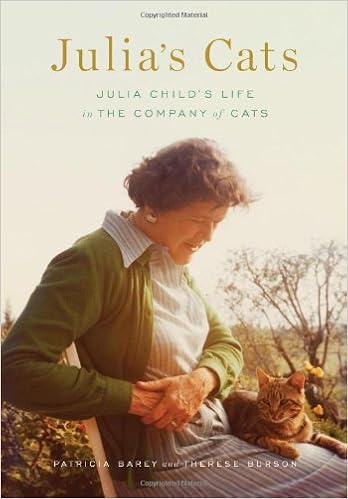
Julia's Cats: Julia Child's Life in The Company of Cats by Patricia Barey and Therese Burson
In 1948, the newly-wedded Julia Child settled into married life with Paul in Paris. She loved the sights, sounds, smells, and of course the food. But her life wasn't complete until an adorable little feline joined their household. Minette was supposed to be a mouser, but as Julia's culinary skills took off, the cat enjoyed far better fare.
Minette helped Julia's French skills take off. One day she stopped at the local market to buy fish and stumbling over the words, asked if there were any fish heads. The fishmonger gave her one and the following week, asked Julia about her cat. The two became friends and often exchanged stories about their cats (34).
Julia's Cats follows Julia's career across France, in the United States, and elsewhere in Europe, almost always accompanied by a minou. A cat-lady through and through, Julia listened for the "minouminouminouminou" (here kitty kitty kitty) of French housewives wherever she went, and more often than not, stumbled upon a feline friend. So enamored with cats, she created a new word for them, "poussiequette".
I am a cat-lady as well and love to look for cats in the neighborhood. Our honeymoon in France was peppered with cats, included "Minou" the local village cat, and we still talk about the feral/mangy street cat that I wasn't allowed to pet, but did take a picture of.
Julia's Cats is filled with anecdotes and stories from Julia and Paul's letters, friends, and family. Julia's Cats is an ode to the felines (and other furry friends) who enrich our lives.
In 1948, the newly-wedded Julia Child settled into married life with Paul in Paris. She loved the sights, sounds, smells, and of course the food. But her life wasn't complete until an adorable little feline joined their household. Minette was supposed to be a mouser, but as Julia's culinary skills took off, the cat enjoyed far better fare.
Minette helped Julia's French skills take off. One day she stopped at the local market to buy fish and stumbling over the words, asked if there were any fish heads. The fishmonger gave her one and the following week, asked Julia about her cat. The two became friends and often exchanged stories about their cats (34).
Minette
Julia's Cats follows Julia's career across France, in the United States, and elsewhere in Europe, almost always accompanied by a minou. A cat-lady through and through, Julia listened for the "minouminouminouminou" (here kitty kitty kitty) of French housewives wherever she went, and more often than not, stumbled upon a feline friend. So enamored with cats, she created a new word for them, "poussiequette".
I am a cat-lady as well and love to look for cats in the neighborhood. Our honeymoon in France was peppered with cats, included "Minou" the local village cat, and we still talk about the feral/mangy street cat that I wasn't allowed to pet, but did take a picture of.
Julia's Cats is filled with anecdotes and stories from Julia and Paul's letters, friends, and family. Julia's Cats is an ode to the felines (and other furry friends) who enrich our lives.
Thursday, June 14, 2018
The Tea Book
The Tea Book: Experience the World's Finest Teas, Qualities, Infusions, Rituals, Recipes by Linda Gaylard
Linda Gaylard is a tea sommelier; a profession most people probably don't know exists. She writes, "The tea sommelier has the challenging task of convincing tea drinkers that there is much more to tea than a mug and a tea bag. Beyond the bag there is mystery, history, travel, industry, culture, and ceremony: a whole new world to explore."
Gaylard's book reveals the history, mystery, culture, and ceremony of tea. First is an overview of what tea is: the plant, its varieties, and colors. Gaylard explains the anatomy of the tea plant, its growth cycle, harvest, and terroir. A full page is devoted to each major tea-producing country: information is provided about that country's contribution to world tea production, harvest times, what tea varieties are grown, and more.
The book then turns to culture and ceremony. Gaylard walks readers through tea ceremonies of China, Japan, Korea, Russia, and Morocco. I loved seeing pictures of tea cups and pots from around the world.
The final section of the book is devoted to recipes. The recipes are divided up by type of tea: black, green, white... And they include cool, hot, non-alcoholic, and alcoholic brews. I liked the section on tisanes and herbal infusions useful. I want to expand my garden and grow herbs and spices to infuse in teas.
I can't wait to try new teas with friends. For young tea enthusiasts, I reccomend Fancy Nancy Tea Parties
Linda Gaylard is a tea sommelier; a profession most people probably don't know exists. She writes, "The tea sommelier has the challenging task of convincing tea drinkers that there is much more to tea than a mug and a tea bag. Beyond the bag there is mystery, history, travel, industry, culture, and ceremony: a whole new world to explore."
Gaylard's book reveals the history, mystery, culture, and ceremony of tea. First is an overview of what tea is: the plant, its varieties, and colors. Gaylard explains the anatomy of the tea plant, its growth cycle, harvest, and terroir. A full page is devoted to each major tea-producing country: information is provided about that country's contribution to world tea production, harvest times, what tea varieties are grown, and more.
The book then turns to culture and ceremony. Gaylard walks readers through tea ceremonies of China, Japan, Korea, Russia, and Morocco. I loved seeing pictures of tea cups and pots from around the world.
The final section of the book is devoted to recipes. The recipes are divided up by type of tea: black, green, white... And they include cool, hot, non-alcoholic, and alcoholic brews. I liked the section on tisanes and herbal infusions useful. I want to expand my garden and grow herbs and spices to infuse in teas.
I can't wait to try new teas with friends. For young tea enthusiasts, I reccomend Fancy Nancy Tea Parties
Tuesday, June 12, 2018
Do Your Laundry or You'll Die Alone
Do Your Laundry or You'll Die Alone: Advice your mom would give you if she thought you were listening by Becky Blades
I guess I don't have to worry about dying alone since laundry seems to have taken over my life. Said laundry might kill me though. The advice in this book ranges from light-hearted to serious and was written when Blades' elder daughter left for college.
#76: Plan a trip to Paris. Thought it may be a faraway fantasy, setting your sights on a trip to Paris releases your inner French girl and makes every day more chic. Studying Paris--or any place you long to visit--is a luscious way to spend your web-surfing time. By the time you get there, it will feel like a long-lost friend.
I dream of my next trip to France. I prefer real travelling, but arm-chair travelling is far less expensive.
#83: Own a tutu and a boa. Because you just never know.
#91 Black is the new black. Black is not back because black was never gone.
I own several black dresses. Now I just need a tutu and a boa to go with them.
# 145 Use Titles of Respect. Call your friend's dad "Mr." even if he says you don't have to. If you know someone is a doctor, call her "Dr." She worked hard for it.
My best friend still calls my dad "Mr." and he appreciates it. My title is Dr.
Also, your professor is not your best friend; address emails to your professor or TA using his/her appropriate title. And READ THE SYLLABUS.
#216: You're never too old for crayons.
I guess I don't have to worry about dying alone since laundry seems to have taken over my life. Said laundry might kill me though. The advice in this book ranges from light-hearted to serious and was written when Blades' elder daughter left for college.
#76: Plan a trip to Paris. Thought it may be a faraway fantasy, setting your sights on a trip to Paris releases your inner French girl and makes every day more chic. Studying Paris--or any place you long to visit--is a luscious way to spend your web-surfing time. By the time you get there, it will feel like a long-lost friend.
I dream of my next trip to France. I prefer real travelling, but arm-chair travelling is far less expensive.
#83: Own a tutu and a boa. Because you just never know.
#91 Black is the new black. Black is not back because black was never gone.
I own several black dresses. Now I just need a tutu and a boa to go with them.
# 145 Use Titles of Respect. Call your friend's dad "Mr." even if he says you don't have to. If you know someone is a doctor, call her "Dr." She worked hard for it.
My best friend still calls my dad "Mr." and he appreciates it. My title is Dr.
Also, your professor is not your best friend; address emails to your professor or TA using his/her appropriate title. And READ THE SYLLABUS.
#216: You're never too old for crayons.
Wednesday, June 6, 2018
Hungry Planet
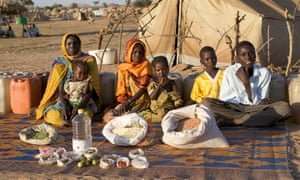
I'm finally getting back into reading more regularly. My latest read was Hungry Planet: What the World Eats by Peter Menzel and Faith d'Aluisio. Peter and Faith photographed families around the world with one week's worth of food, either food purchased or grown. For each entry, the food is divided into categories such as dairy, fruits and vegetables, grains, drinks, and other. A total price is given and converted to U.S. dollars (published in 2005)
. There is also a story about the family and some of the foods pictured. A country profile tells how many calories are available per person per day, what percentage of the population lives in rural or urban areas, what percentage of the population is overweight or obese, and how many McDonald's restaurants are in each country. The families food purchases are placed in the contexts of fast-food, globalization of food, food with a face, diabesity, and ethical food choices.
I enjoyed seeing how much packaged versus unpackaged foods were pictured. In Okinawa, 96 year-old Matsu doesn't shop in a supermarket because there isn't one. She grows her own vegetables or purchases them from a local cooperative. She cannot fathom that some people don't grow any of their food and have no agricultural knowledge. She also has no idea was fast food is. I've expanded my own garden this year.
The authors also have a book that shows what people around the world eat in a day. I did a mental tally of what I've eaten so far today: 1 bagel with cream cheese, a peach, some raspberries, a Frappucino, chicken fries, 160z of loose leaf tea, and some water. I think I would be slightly appalled to photograph what my family eats for a week, but reading this book and looking at the pictures was a bit of a wake-up call. We eat a lot of packaged food and more sugar and fat than we should.
I enjoyed seeing how much packaged versus unpackaged foods were pictured. In Okinawa, 96 year-old Matsu doesn't shop in a supermarket because there isn't one. She grows her own vegetables or purchases them from a local cooperative. She cannot fathom that some people don't grow any of their food and have no agricultural knowledge. She also has no idea was fast food is. I've expanded my own garden this year.
The authors also have a book that shows what people around the world eat in a day. I did a mental tally of what I've eaten so far today: 1 bagel with cream cheese, a peach, some raspberries, a Frappucino, chicken fries, 160z of loose leaf tea, and some water. I think I would be slightly appalled to photograph what my family eats for a week, but reading this book and looking at the pictures was a bit of a wake-up call. We eat a lot of packaged food and more sugar and fat than we should.
France
Chad
Contents
Tuesday, May 1, 2018
100 Places That Can Change Your Child's Life
100 Places That Can Change Your Child's Life: From Your Backyard to the Ends of the Earth by Keith Bellows, writer and editor of "National Geographic Traveler Magazine"
The premise of this book is simple, give your children the gift of travel. Teach them how to travel in order for them to travel to learn. The world is the greatest classroom for children. Sadly, a 2006 National Geographic poll found that American children are not very culturally literate. Only 37% could find Iraq on a map, 20% thought Sudan was in Asia, and half couldn't identify New York on a map (7). I am guilty of a lack of geographic knowledge; my world geography and even U.S. geography is terrible. Although I do try to read about other places and travel when I can.
As a parent, I want to travel with my children and take across the country and even around the world. As a National Geographic publication, this book doesn't fail to deliver and is highly informative. The book is divided into regions: United States/Canada, Caribbean/Mexico/South America, Europe, Africa/Middle East, Asia, and Oceania/Antarctica. Each entry includes a page or two about the chosen place with historical highlights and itinerary suggestions from locals or local guides. I particularly liked the recommended reading/media section at the bottom of each page. There were two or three books, CDs, or movies for each place either for children or for children and adults. I also found it interesting that there were no pictures in this book, rather unusual for a travel book.
I did find a few limitations with the scope of this book. Although the title mentions "your backyard" none of the places mentioned quite fit this bill. All of them are large cities, famous landmarks, or well-known places. For example, Mount Rushmore, Manhattan, Gettysburg, Paris, London, Vatican City, Pyramids of Giza, Jerusalem, the Serengeti, Taj Mahal, The Great Wall of China, and the Great Barrier Reef. Some of these places may indeed be local, but I also feel many of them are cost prohibitive. I think the book could have been improved by making cheaper suggestions; instead of bird-watching in the Serengeti, go to your local State Park and bird-watch or identify fish in a local lake.

The premise of this book is simple, give your children the gift of travel. Teach them how to travel in order for them to travel to learn. The world is the greatest classroom for children. Sadly, a 2006 National Geographic poll found that American children are not very culturally literate. Only 37% could find Iraq on a map, 20% thought Sudan was in Asia, and half couldn't identify New York on a map (7). I am guilty of a lack of geographic knowledge; my world geography and even U.S. geography is terrible. Although I do try to read about other places and travel when I can.
As a parent, I want to travel with my children and take across the country and even around the world. As a National Geographic publication, this book doesn't fail to deliver and is highly informative. The book is divided into regions: United States/Canada, Caribbean/Mexico/South America, Europe, Africa/Middle East, Asia, and Oceania/Antarctica. Each entry includes a page or two about the chosen place with historical highlights and itinerary suggestions from locals or local guides. I particularly liked the recommended reading/media section at the bottom of each page. There were two or three books, CDs, or movies for each place either for children or for children and adults. I also found it interesting that there were no pictures in this book, rather unusual for a travel book.
I did find a few limitations with the scope of this book. Although the title mentions "your backyard" none of the places mentioned quite fit this bill. All of them are large cities, famous landmarks, or well-known places. For example, Mount Rushmore, Manhattan, Gettysburg, Paris, London, Vatican City, Pyramids of Giza, Jerusalem, the Serengeti, Taj Mahal, The Great Wall of China, and the Great Barrier Reef. Some of these places may indeed be local, but I also feel many of them are cost prohibitive. I think the book could have been improved by making cheaper suggestions; instead of bird-watching in the Serengeti, go to your local State Park and bird-watch or identify fish in a local lake.
Thursday, April 5, 2018
Book 100
I've finished my 100th book today! That means I have completed 10% of my goal to read 1,000 books. I started this project in July of 2016, so about a year and a half ago.
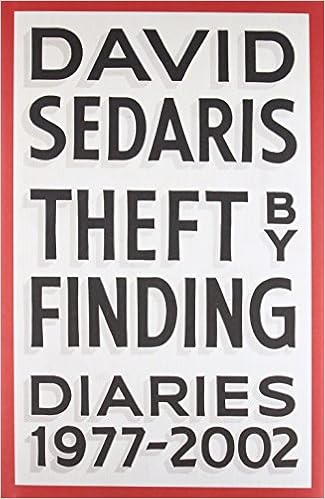
Book 100 was Theft by Finding: Diaries 1977-2002 by David Sedaris. My first exposure to Sedaris was listening to the audio version of When You Are Engulfed in Flames. Like many people, I thought I was listening to a woman [read his stories], but I later realized that this unique voice was David's. Theft by Finding is not all of his diary entries for 30-odd years, but at 514 pages the entries are significant. Incidentally, this blog is the most successful "diary" I've ever kept.
My favorite entries are about his adventures learning French and the time he spends in Paris and Normandy.
There's this gem about waiting for a taxi in Paris. You are supposed to wait in line and disabled people are given priority. "This seems fair, seeing as the buses and subways are inaccessible, but then it got out of hand, and a dozen more people headed to the front. Either the train from Lourdes had just pulled up or owning a cell phone and a little to much gold jewelry are now considered handicaps by the French government" (359).
Sedaris is the type of French student teachers dream of. First, he types his homework and he fastened the pages together with a paperclip (a staple would be better, but still). "She told us to keep our sentences simple, and I didn't quite obey. But why write 'I went to the store with a friend' when, without relying on the dictionary, I can say, 'I visited the slaughterhouse with my godfather and a small monkey'? " (361). In high school English, I made my vocabulary sentences have a them, but nothing quite like Sedaris' creativity.
Here is a link for my favorite David Sedaris clip.
Book 100 was Theft by Finding: Diaries 1977-2002 by David Sedaris. My first exposure to Sedaris was listening to the audio version of When You Are Engulfed in Flames. Like many people, I thought I was listening to a woman [read his stories], but I later realized that this unique voice was David's. Theft by Finding is not all of his diary entries for 30-odd years, but at 514 pages the entries are significant. Incidentally, this blog is the most successful "diary" I've ever kept.
My favorite entries are about his adventures learning French and the time he spends in Paris and Normandy.
There's this gem about waiting for a taxi in Paris. You are supposed to wait in line and disabled people are given priority. "This seems fair, seeing as the buses and subways are inaccessible, but then it got out of hand, and a dozen more people headed to the front. Either the train from Lourdes had just pulled up or owning a cell phone and a little to much gold jewelry are now considered handicaps by the French government" (359).
Sedaris is the type of French student teachers dream of. First, he types his homework and he fastened the pages together with a paperclip (a staple would be better, but still). "She told us to keep our sentences simple, and I didn't quite obey. But why write 'I went to the store with a friend' when, without relying on the dictionary, I can say, 'I visited the slaughterhouse with my godfather and a small monkey'? " (361). In high school English, I made my vocabulary sentences have a them, but nothing quite like Sedaris' creativity.
Here is a link for my favorite David Sedaris clip.
Subscribe to:
Posts (Atom)